Why Bron Chose PQ-MPC Wallet Infrastructure
Why Bron is working with Silence on PQ-MPC wallet infrastructure for stronger post-quantum digital asset security.

Written by
Jay Prakash
Insights
May 15, 2026
Bron is a non-custodial wallet that brings institutional-grade key management to long-term, high-value digital asset holders.
Built by the team behind Copper.co, the product runs on a three-party MPC architecture — with cryptographic shards distributed across the user's device, the Bron platform, and an independent third party — so that no single component, including Bron itself, can move funds unilaterally. The wallet is designed explicitly for the people for whom crypto is part of a multi-decade balance sheet: families, long-term holders, and high-net-worth individuals planning across estates and generations, not market cycles.
That position makes Bron an unusually informative design partner for a post-quantum migration.
Three reasons stand out.
Bron's users live on the longest time horizons in self-custody. A wallet that has to hold value across decades — through inheritance, recovery, life events, and changing operational environments — is one where the "eventual" in "elliptic-curve signatures will eventually fall to quantum attacks" stops being abstract. The keys being generated today are securing positions whose intended life exceeds the most optimistic estimates for fault-tolerant quantum hardware. Migration is not a feature for these users; it is a precondition for the product's core promise.
Robust design starts from the assumption that primitives will need to be replaced. Bron's architecture already treats failure modes as first-class — lost devices, compromised hosts, deceased users, jurisdictional changes — and builds around the discipline that no part of the system should be irreplaceable. Cryptographic agility is the same principle applied to algorithms: assume ECDSA and EdDSA will be replaced, and engineer the rails so that replacement is a planned operation rather than an emergency. PQ-MPC Vault is built around exactly that posture, offering a hybrid path in which post-quantum and classical signing operate in parallel and operators migrate on their own timelines.
Threshold ML-DSA on off-the-shelf devices is an engineering problem, not just a cryptographic one. Specifying a post-quantum signature scheme is one thing. Making it run, in a threshold setting, on the phone in a user's pocket — within the latency, memory, and bandwidth envelopes that consumer self-custody actually demands — is another. Lattice-based signatures carry materially larger key, signature, and protocol payloads than ECDSA, and a naive implementation does not survive contact with commodity hardware. Bron has been a critical design partner in surfacing exactly these real-world constraints and helping us push the implementation across them. The work reflects the philosophy Alireza Rafiei articulated in his DeCompute '25 talk, Cryptography Engineering That Sucks Less: meeting the device where it actually lives, not where the protocol pretends it does.
Post-quantum readiness has been treated as a 2030 problem. Silence Laboratories has turned it into a 2026 product, and we're proud Bron stood alongside them as a design partner to make it real. Threshold signatures, confidential compute, and intent verification — together, in production — is the new baseline for wallet infrastructure, and Bron's clients would be among the first to benefit from it.
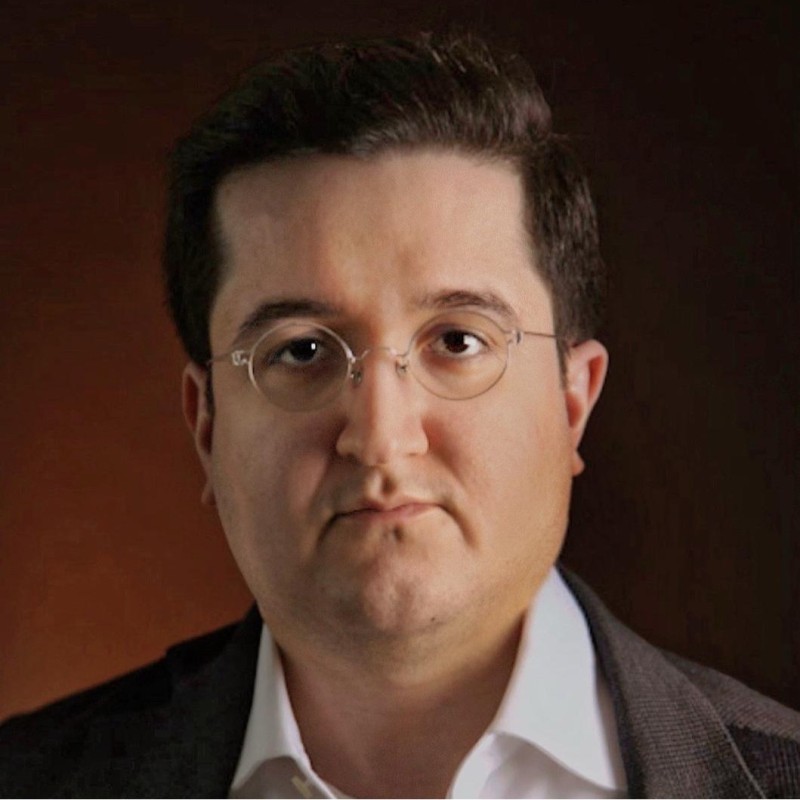
Alireza Rafiei
Head of Cryptography, Bron
Working with Bron as a design partner means the migration path we ship is validated against one of the most demanding operational profiles in self-custody: consumer-grade UX, institutional-grade security, and a time horizon long enough that post-quantum risk is not a hypothetical.
It also means post-quantum MPC moves out of pure institutional infrastructure and into the wallets that everyday holders will rely on for the long-lived assets they care about most.
Learn more about Silence Laboratories' quantum-safe MPC enterprise wallet infrastructure
SHARE


