
Unlocking Privacy-Preserving Financial Analytics at Scale
Silence launches a privacy-preserving financial analytics toolkit for secure insights without exposing sensitive data.

Written by
Kush Kanwar
Insights
Mar 29, 2025
Today, financial data fiduciaries and processors often face a tough tradeoff: they’re either unable to access valuable data that could improve customer understanding due to privacy and compliance constraints, or they have to compromise on data utility to stay within regulatory boundaries. On top of that, centralising data for processing creates a single point of failure — expanding the attack surface, especially when sensitive data is handled in plaintext. What’s more concerning is the lack of guarantees that data is used strictly for its intended purpose. Collaboration involving multiple institutions or crossing national borders further complicates the process.
In order to address these specific challenges, we at Silence Laboratories have launched our Privacy-Preserving Financial Analytics Toolkit, addressing these pain points across multiple use cases in the financial services industry.
The future of financial intelligence is collaborative, and confidential
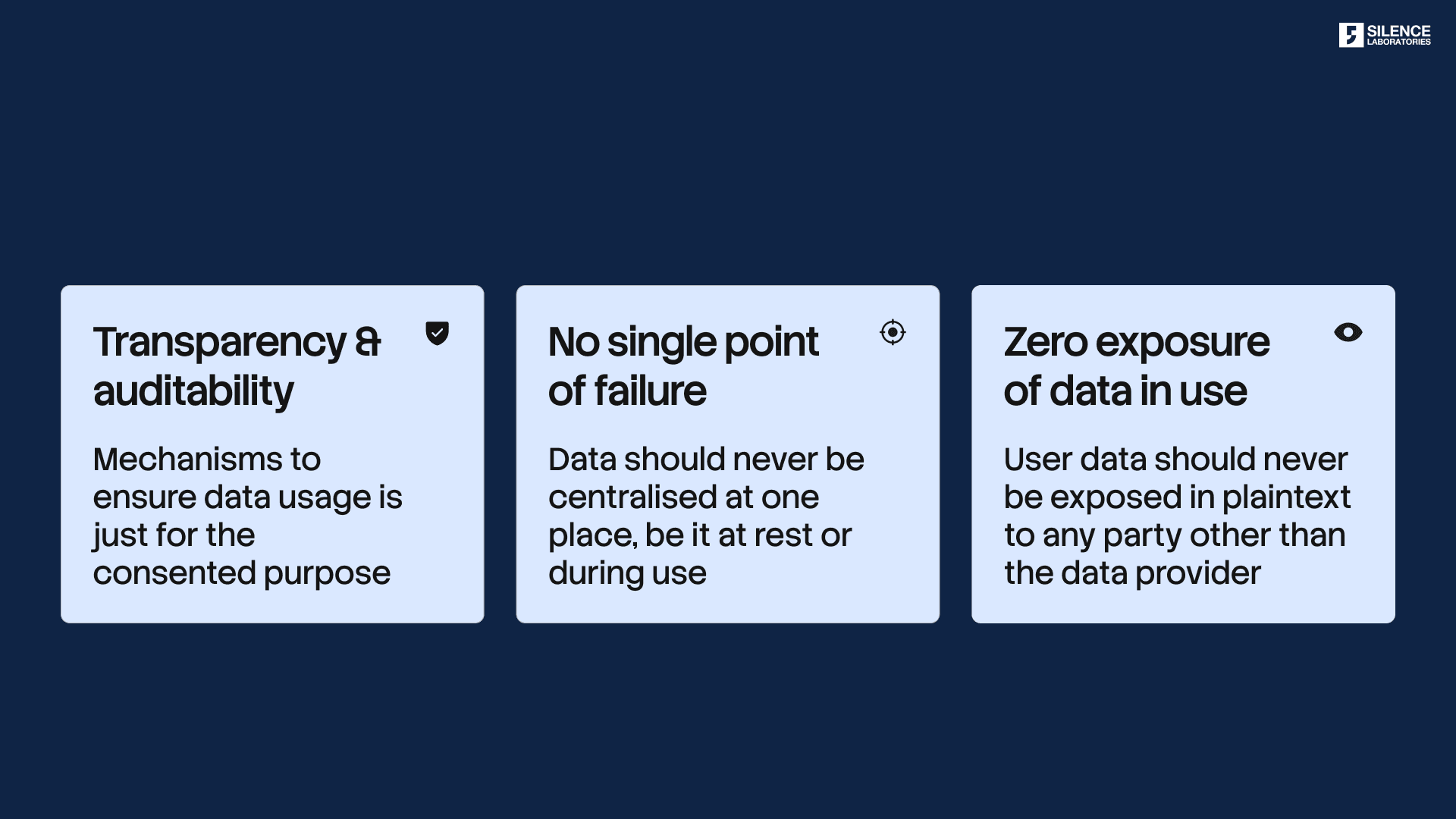
Our toolkit leverages advanced cryptographic techniques, including Multi-Party Computation (MPC), to enable secure collaboration on sensitive financial data without exposing raw inputs. It allows multiple financial institutions to plug in their private datasets and jointly compute any operation or function, receiving only the aggregate output, while keeping their individual data completely confidential. The toolkit is built keeping in mind the following design principles:
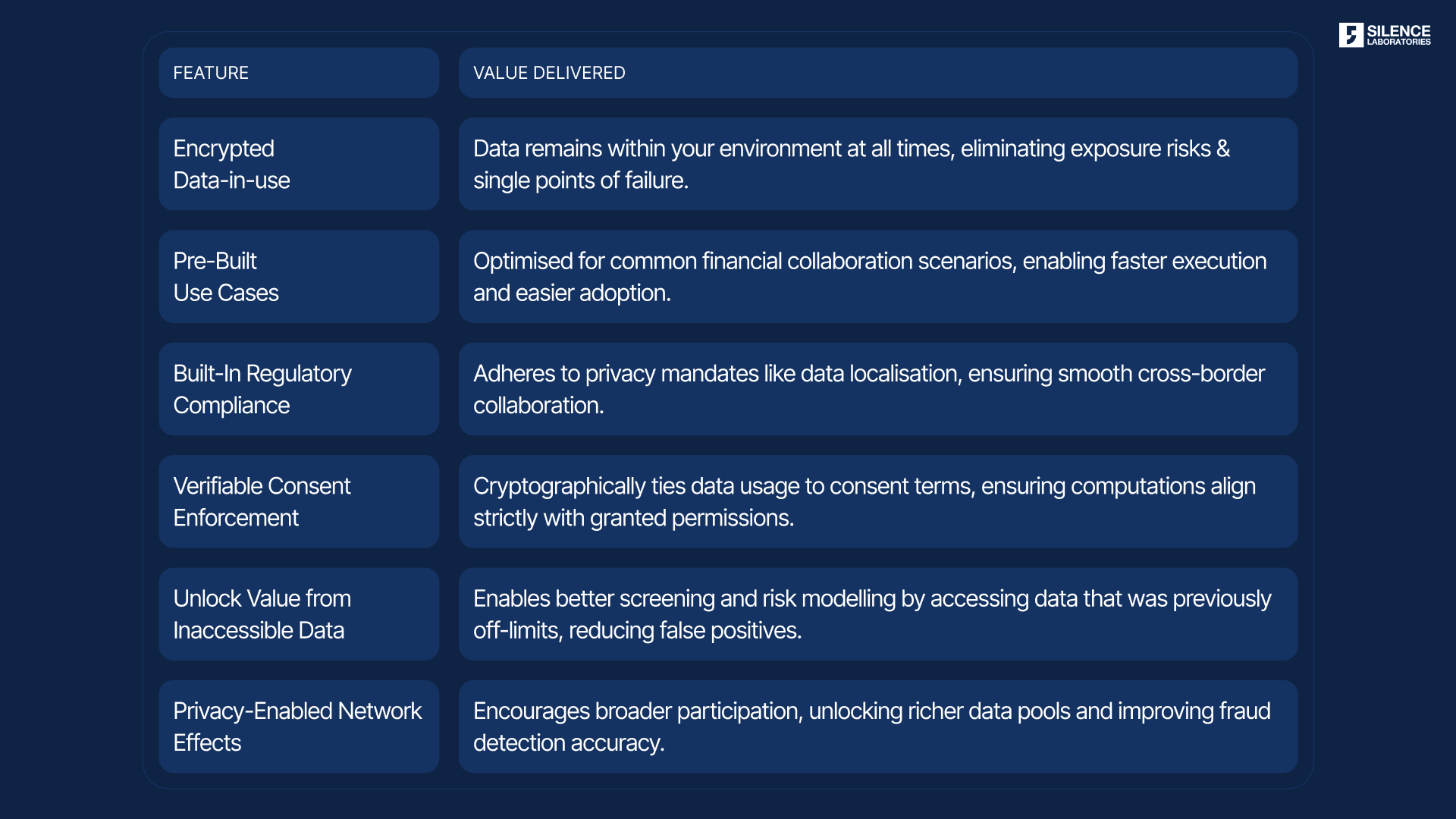
Built with flexibility and performance in mind, the toolkit comes optimised with high-impact financial use cases baked in (more on that later), and is also capable of handling custom or on-demand analytical requests with ease.
Features and Value Proposition
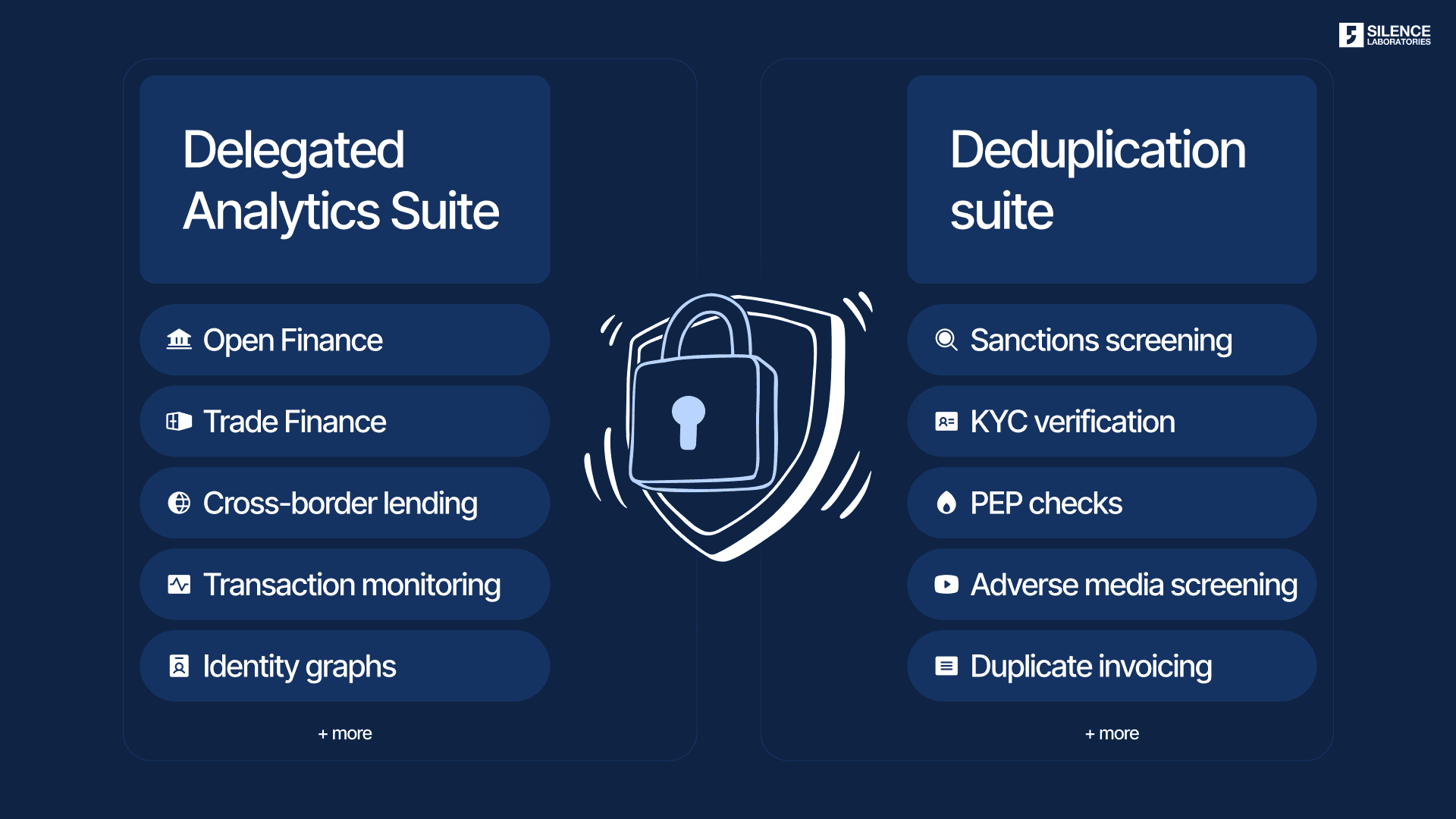
Broadly, the toolkit consists of two product suites — Secure Delegated Financial Analytics and Deduplication. Each suite is purpose-built with distinct capabilities, designed to unlock value across a wide range of financial use cases.
1. Secure Delegated Financial Data Analytics Suite
“Analyse my data, but never see it.”
More often than not, multiple organisations — from financial data fiduciaries and processors to RegTechs and tech providers — need access to a customer’s financial information to deliver valuable services. However, delegating analytics to third parties raises serious concerns around data handling, potential misuse, and breaches.
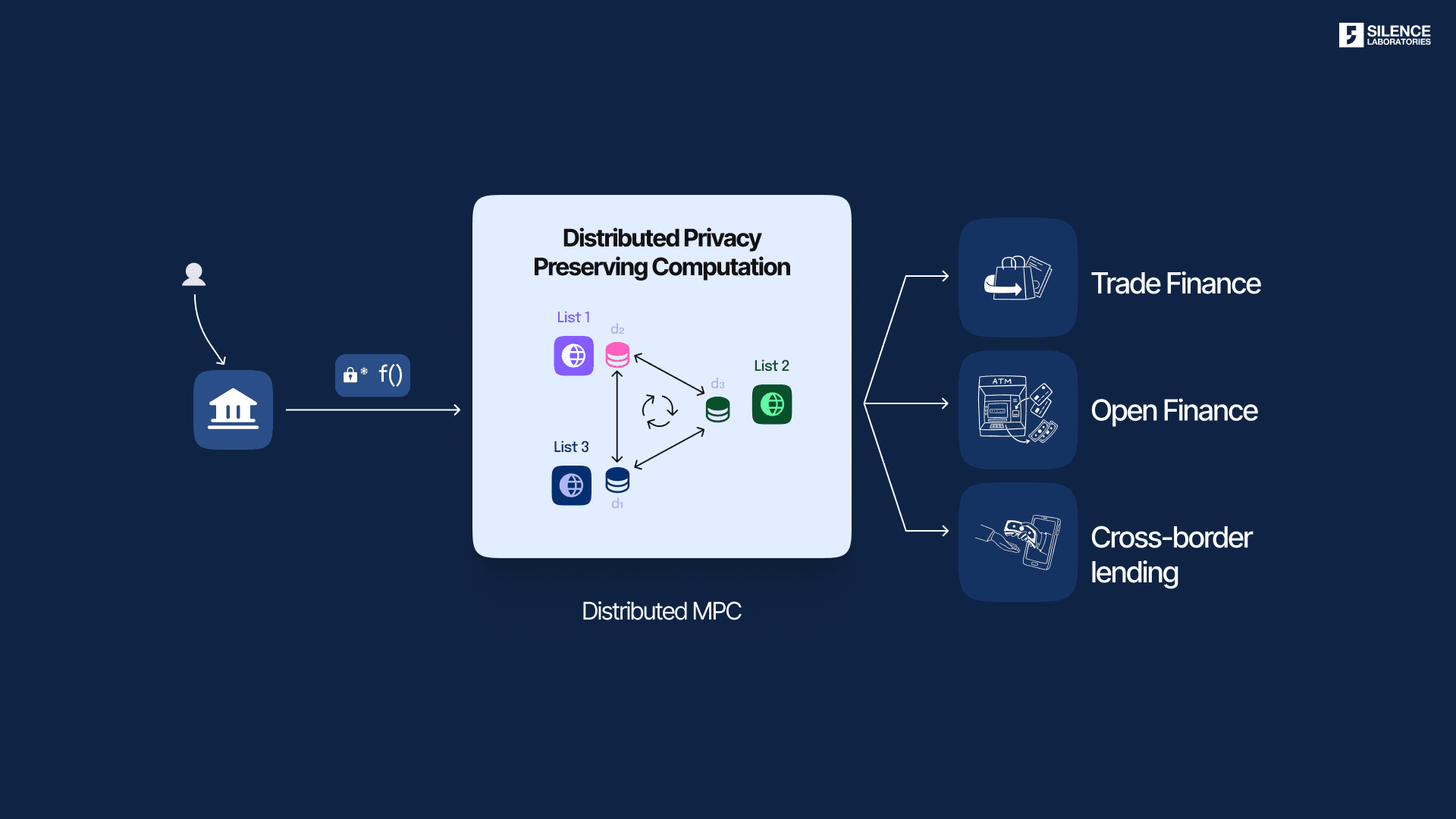
Our Secure Delegated Financial Analytics suite tackles these challenges head-on. It enables organisations to run analytics, apply models, and extract insights, all without ever accessing or moving raw data. What’s more, it enforces consent at the compute layer itself, ensuring that only pre-approved operations are allowed. This tight coupling of consent and computation ensures that data is processed strictly within the bounds of its intended purpose.
📌 Use Cases
A. Open Finance:
Redesigning Open Finance to strengthen governance via cryptographic privacy and auditability mechanisms, and thereby reducing the trust gap between the data providers and fiduciaries
Enabling an ecosystem where participants collaborate on customer-consented inferences, without any movement of raw data
“Open Finance is entering a pivotal phase of growth, where the realization of its full potential depends on a deeper respect for consent and data privacy. These elements are becoming increasingly essential to encourage data custodians to participate, thereby driving the industry toward socially optimal outcomes.
I believe that Privacy-Enhancing Technologies (PETs), such as the proposed solution leveraging Multi-Party Computation (MPC), are both highly relevant and immediately implementable. I support the idea of FIUs and TSPs forming closer partnerships to implement PETs. By doing so, they will enable the responsible use of data, ensuring secure participation in computations without compromising privacy.”
- Vamsi Madhav, CEO Finvu
B. Trade Finance:
Analyse the financial health of traders to make informed financing decisions for trade transactions — all without exposing sensitive financial records
Collaborate with other banks or lending institutions to evaluate risk indicators and detect duplicate invoicing — a common source of trade-related fraud — without revealing proprietary or customer data
Facilitate seamless trade between multiple parties while keeping sensitive trade details confidential, ensuring privacy is preserved at every step of the transaction
C. Cross-border Lending:
Screen customers for creditworthiness across jurisdictions, without transferring raw data
Ensure compliance with jurisdiction-specific privacy regulations and data localisation requirements
Derive actionable insights for lending decisions without ever accessing or exposing a customer’s raw financial data
2. Deduplication Suite
“Find overlaps without revealing the rest”
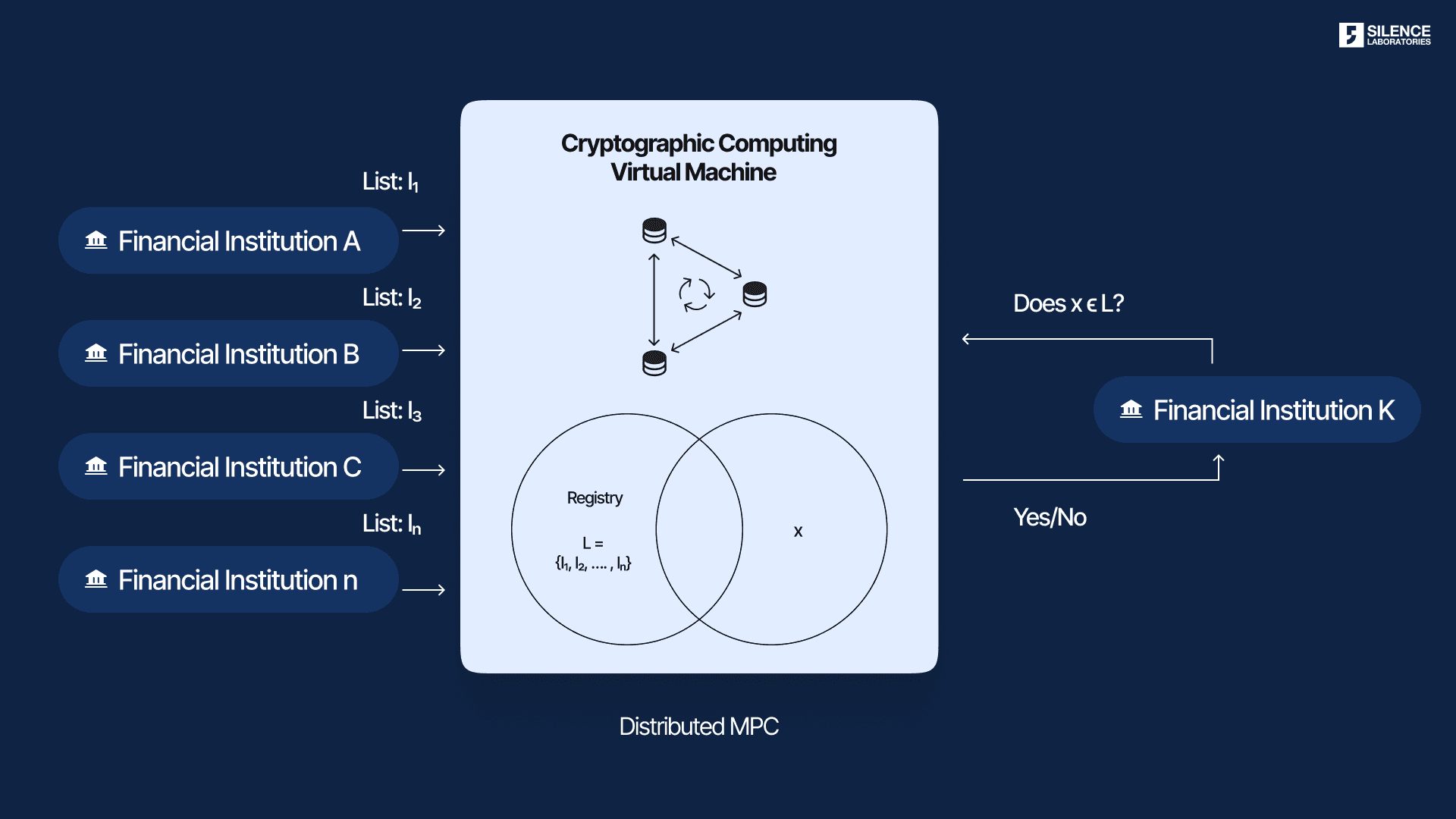
Our toolkit includes robust Private Set Intersection (PSI) protocols, enabling organisations to identify the presence or absence of customers in proprietary datasets, without revealing anything about the customers or the datasets itself.
📌 Use Cases
Our toolkit is purpose-built to support a range of fraud detection and compliance checks — especially in scenarios where data sharing is constrained. Financial institutions can often share only limited information (such as just a customer’s name), while dataset owners are unwilling to expose their full datasets.
With our privacy-preserving approach, both parties can collaborate without ever revealing their private inputs. This not only makes cross-border collaboration possible, but also unlocks access to richer data for better screening outcomes. Most importantly, it builds trust and encourages participation — enabling privacy-enabled network effects. For example, the more banks that collaborate on detecting duplicate invoicing, the more accurate and effective the system becomes for detecting fraud.
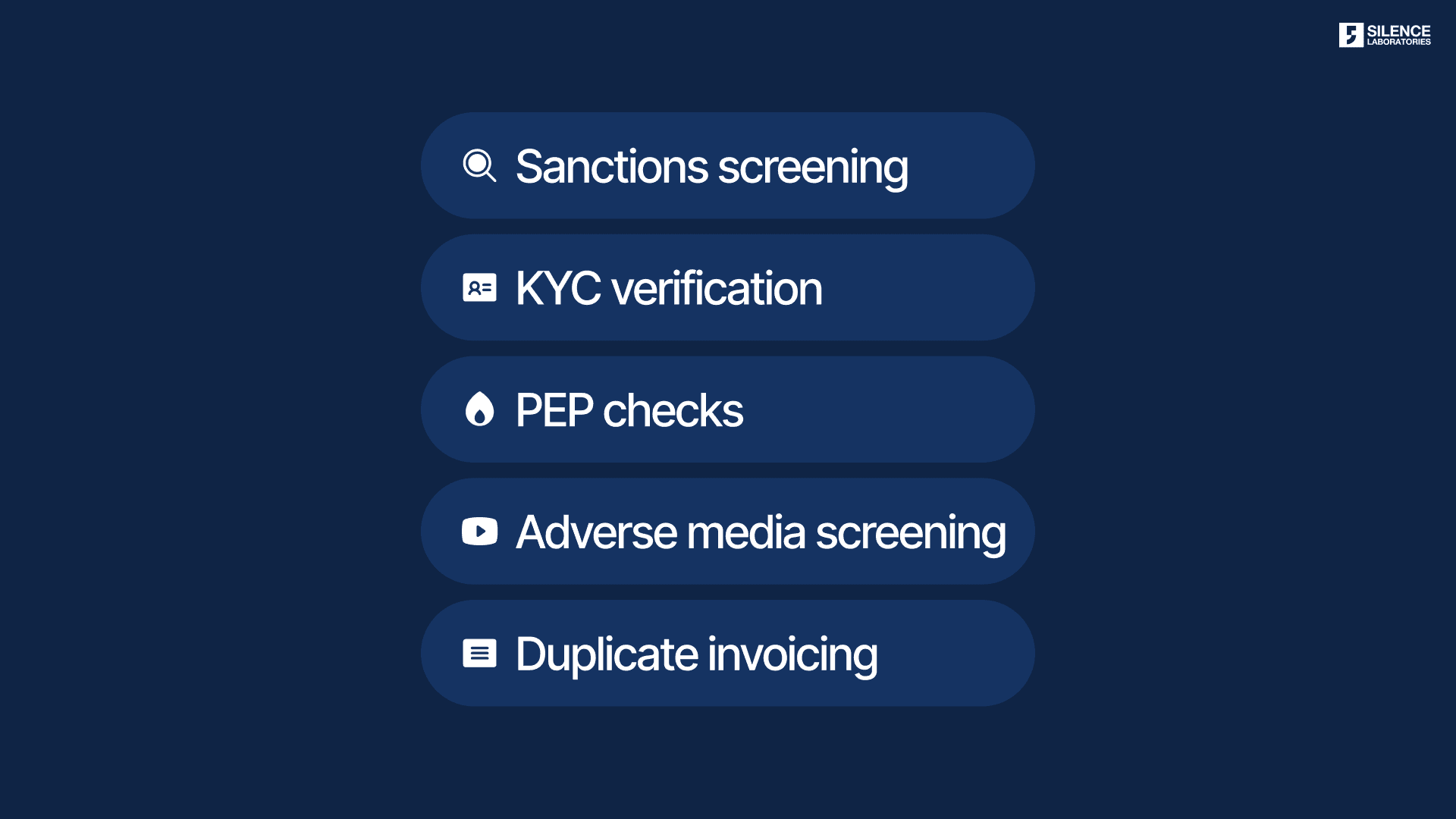
Sample flow of sanctions screening
For a sanctions screening check, the following steps outline how an originating bank and a beneficiary bank can securely collaborate. The originating bank provides customer details, while the beneficiary bank contributes its proprietary sanctions list. Using Multi-Party Computation (MPC), the originating bank can determine whether a customer appears on the sanctions list without exposing or sharing their respective data with each other or any third party, including the MPC provider.
A. Connecting sanctions list
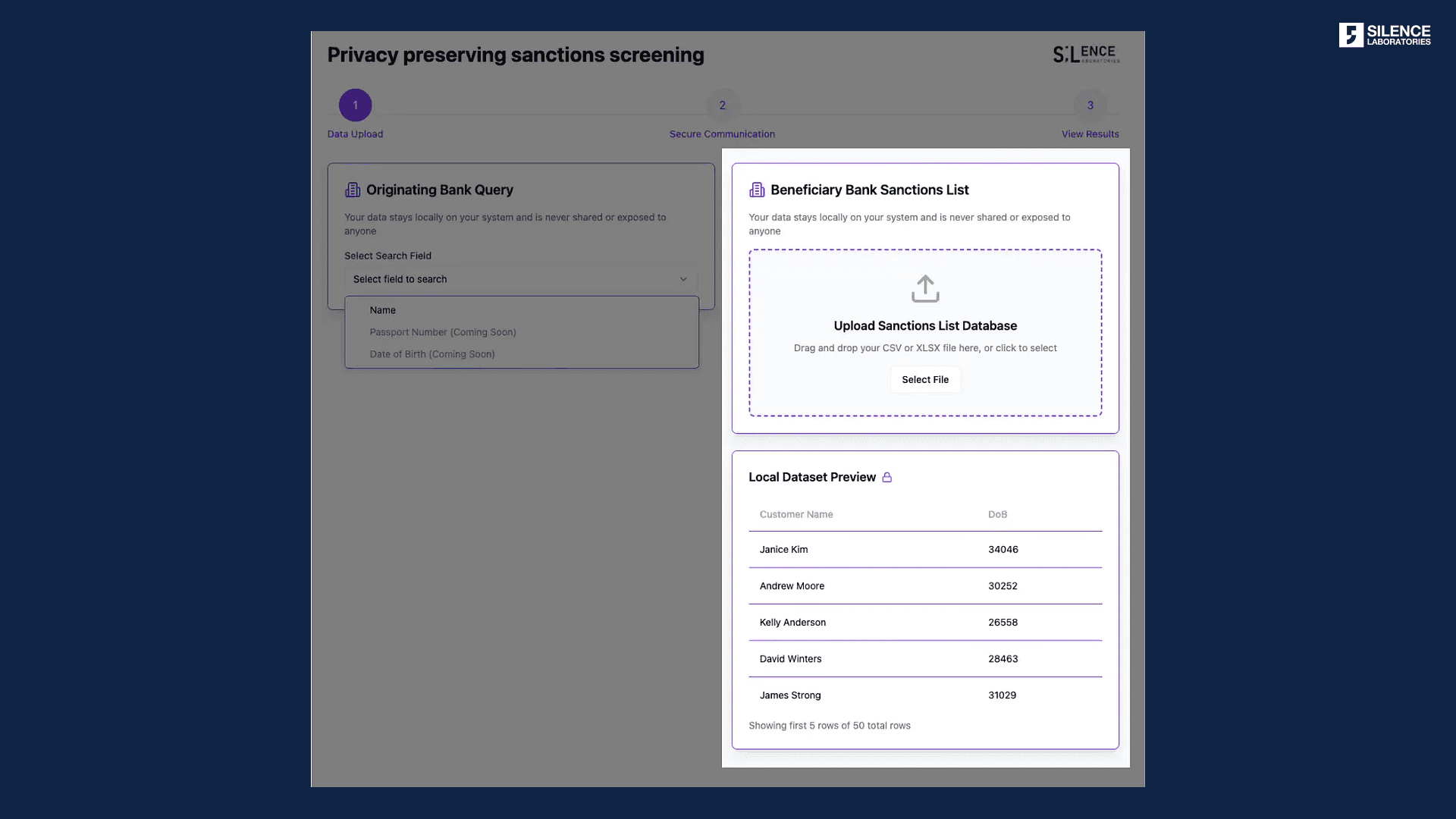
The beneficiary bank installs the MPC library at their endpoint, enabling a secure connection to their proprietary sanctions list. The list remains encrypted locally, ensuring that no entity other than the beneficiary bank can access it in plaintext.
B. Requesting query
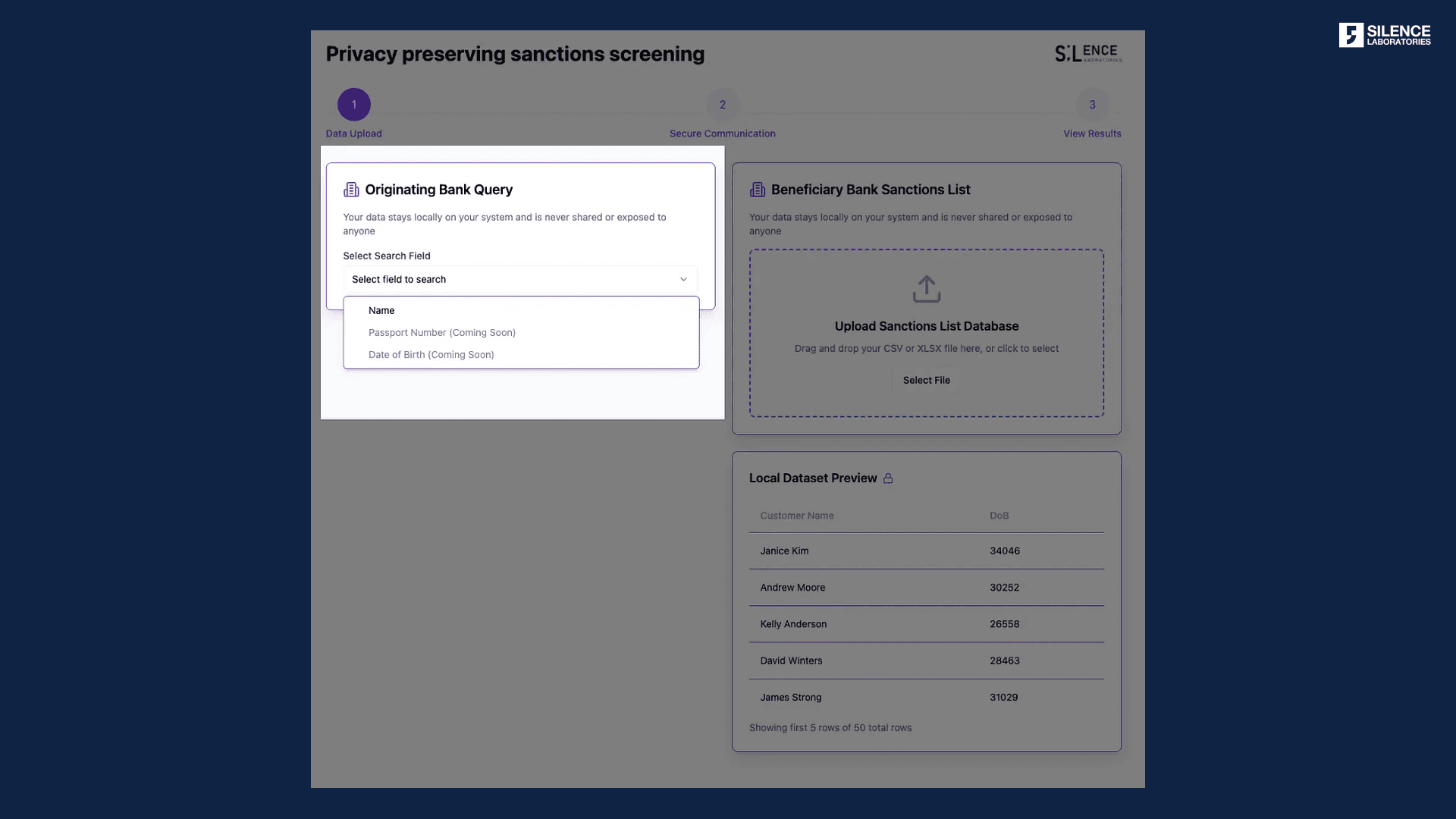
The originating bank selects the field it wants to use for customer verification, such as name, identity number, or date of birth. These details are then entered and encrypted locally, ensuring that the beneficiary bank never receives the details of the customer under screening.
C. Secure communication
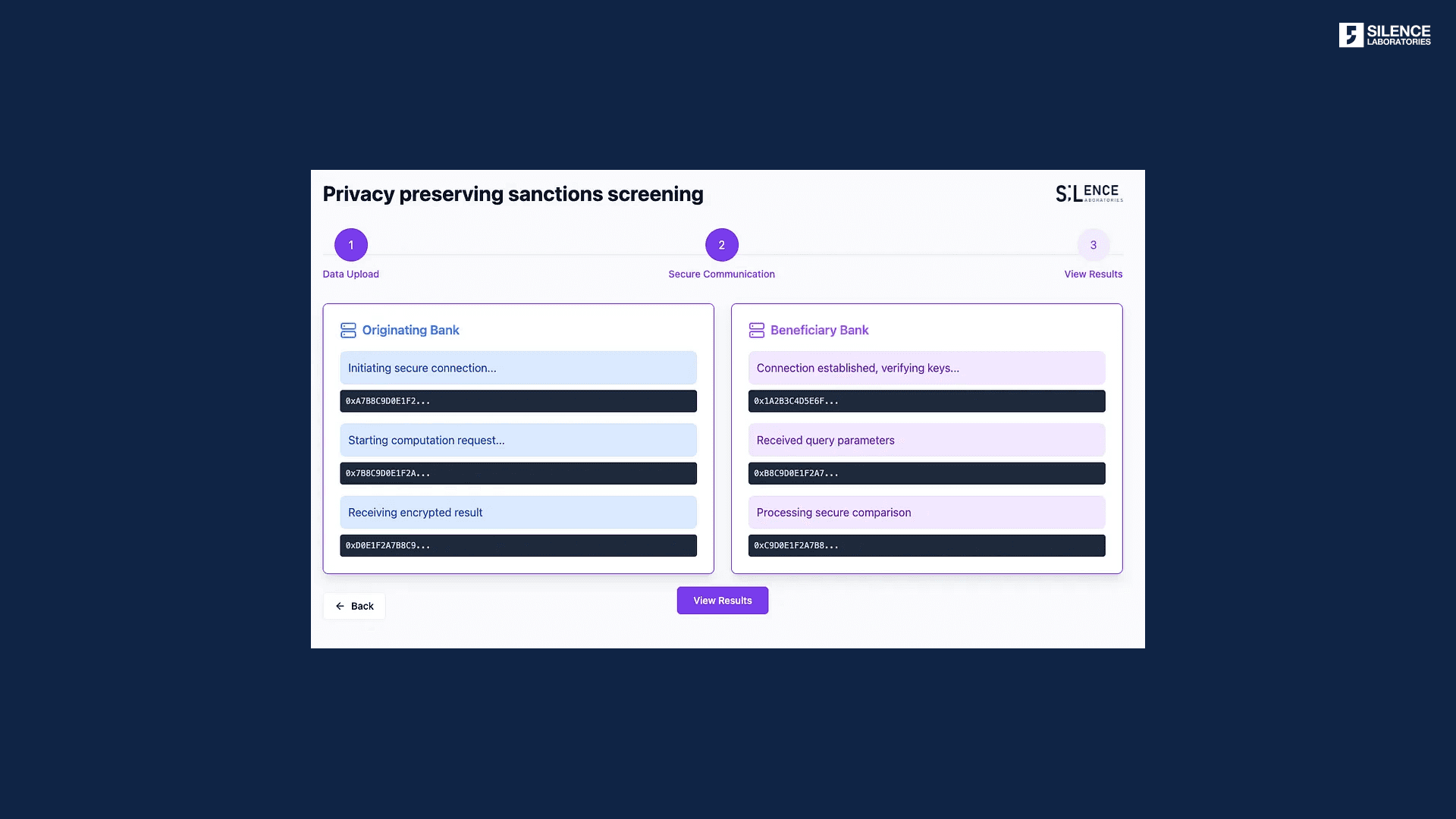
Upon receiving the respective inputs, the banks’ endpoints initiate a series of secure communications using Multi-Party Computation (MPC), specifically Private Set Intersection (PSI). This process enables both parties to exchange encrypted messages to determine whether the entered customer details appear on the beneficiary bank’s sanctions list. Throughout the process, the originating bank gains no visibility into the sanctions list, while the beneficiary bank remains unaware of the customer’s details, ensuring complete privacy for both entities.
D. Inferences
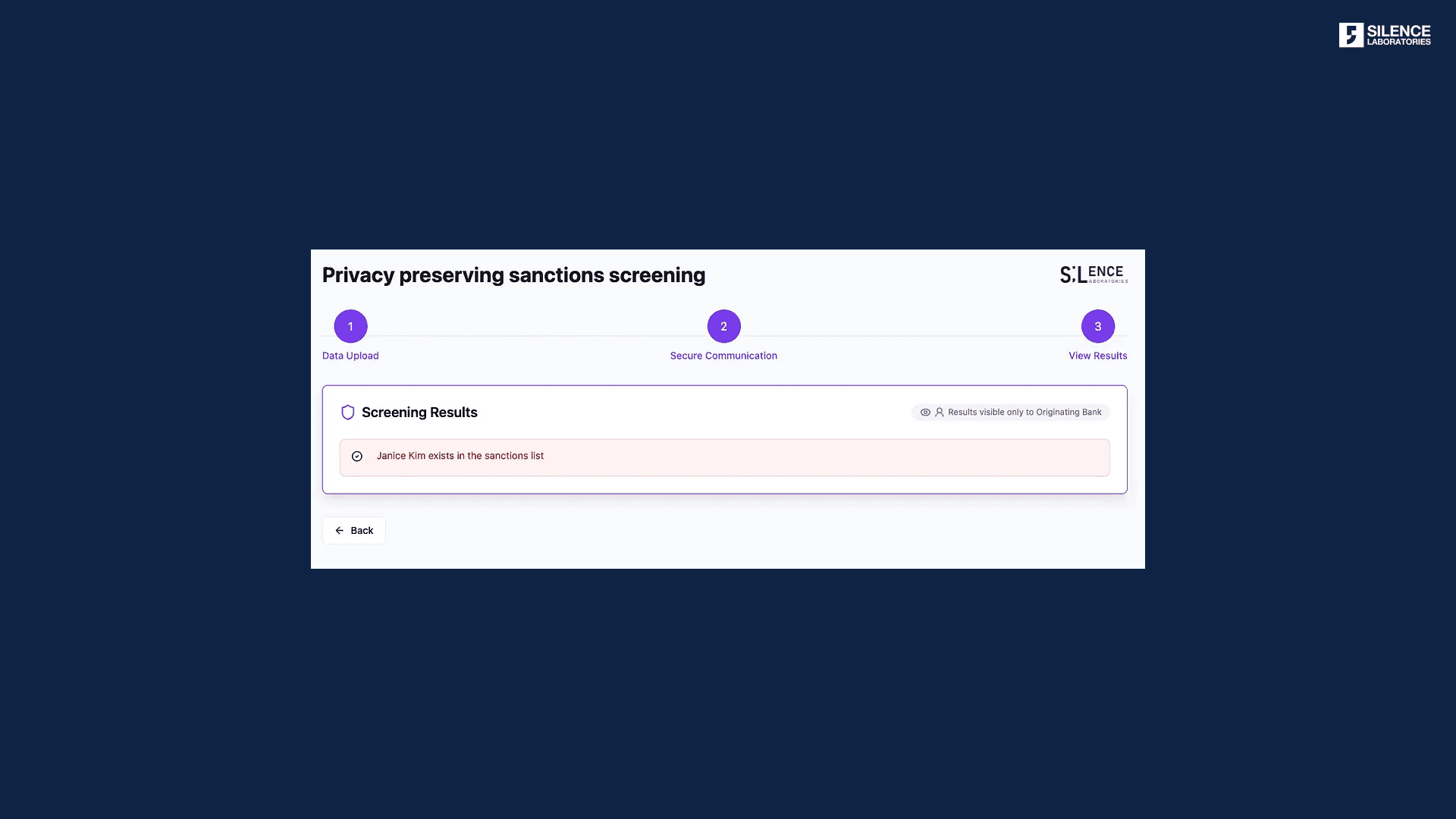
The result of this secure communication is revealed to the originating bank as a simple yes/no output, indicating whether the queried customer appears on the sanctions list. No additional information is disclosed, ensuring that only the necessary insight is shared. Based on this outcome, the originating bank can take the appropriate action while maintaining full compliance and data privacy.
Privacy Enabled Collaborative Flywheel
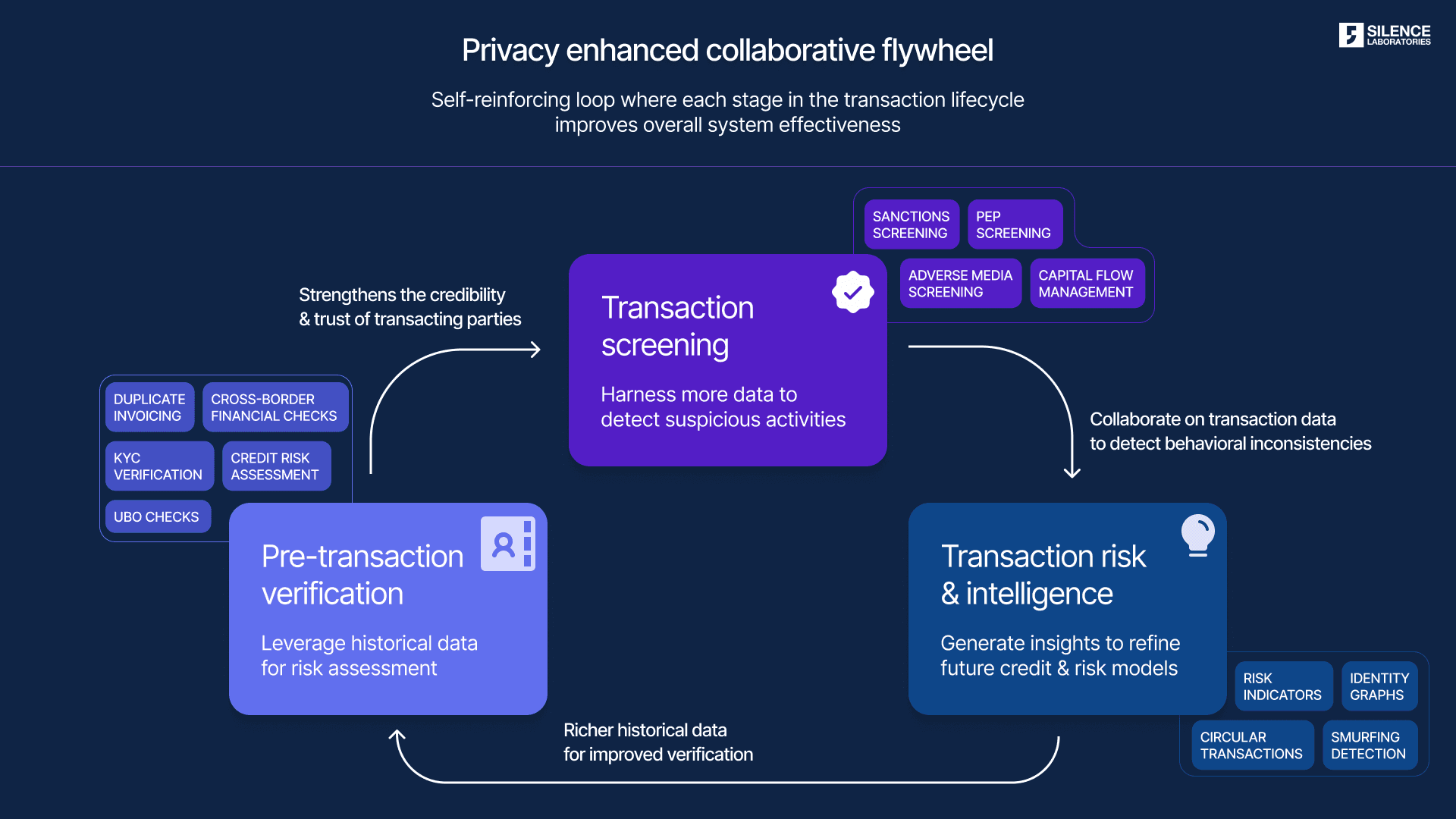
Our solution introduces a flywheel effect, where enhanced collaboration fuels better customer screening and fraud detection, leading to improved compliance and risk mitigation, which in turn builds institutional trust and strengthens financial resilience. This creates a self-reinforcing loop where each stage in the transaction lifecycle improves overall system effectiveness.
Integration with Databricks

We’re excited to share that we’ve recently partnered with Databricks, making our Privacy-Preserving Financial Analytics Toolkit available on the Databricks Marketplace. This collaboration marks a significant step forward in simplifying access to advanced privacy-preserving analytics. Our toolkit is already live with key financial use cases — including sanctions screening and capital flow management checks — that enable institutions to perform sensitive computations without ever exposing raw data.
By being natively integrated into the Databricks ecosystem, organisations already onboarded with Databricks can seamlessly adopt our solution. They can quickly install our libraries from the marketplace, connect their datasets, and begin running secure, privacy-preserving computations with minimal setup. This drastically accelerates deployment and removes friction, allowing teams to unlock collaborative analytics and compliance workflows faster.
What’s Next
Financial services is just the beginning. We’re actively expanding the capabilities of the toolkit to unlock even more value:
Broader Financial Use Cases
We’re optimising the toolkit to support a wider range of financial use cases, with an expanded set of out-of-the-box functions for everything from risk modelling to compliance workflowsCustom Function Compiler
We’re building a compiler that enables teams to define and run any arbitrary function across siloed datasets — making privacy-preserving collaboration truly flexible and programmableBeyond Finance
We’re also extending the toolkit to other industries where data privacy is critical — including AdTech, Telecom, and Healthcare — empowering secure collaboration wherever sensitive data resides
Resources
Check out some of our latest publications to see the application of our Privacy Preserving Financial Analytics Toolkit in action:
Whitepaper on strengthening Open Finance with cryptographic Privacy and auditability: https://md.silencelaboratories.com/s/CQW5fu-fP
A techno-legal take on technological enforcement of consent: https://www.livemint.com/opinion/columns/lets-plug-a-privacy-loophole-in-india-s-account-aggregator-system-digital-public-infrastructure-dpi-data-ai-regulation-11731925401734.html
Implementing MPC for cross-border compliance checks in BIS’ Project Mandala: https://www.bis.org/publ/othp87.pdf
Finternet (an initiative being spearheaded by the team responsible for UPI and Aadhar in India)-https://finternetlab.io/images/draftWhitepapers/mpc-compliance_Nov2024.pdf
At the heart of our vision is a simple belief: data collaboration shouldn’t require data exposure. With our privacy-preserving analytics toolkit, financial institutions can unlock new forms of cooperation, trust, and intelligence — without ever sacrificing control. Whether you’re exploring private analytics for compliance, partnerships, or innovation, we’re here to help. Feel free to contact us at info@silencelaboratories.com for further details and discussion.
SHARE


