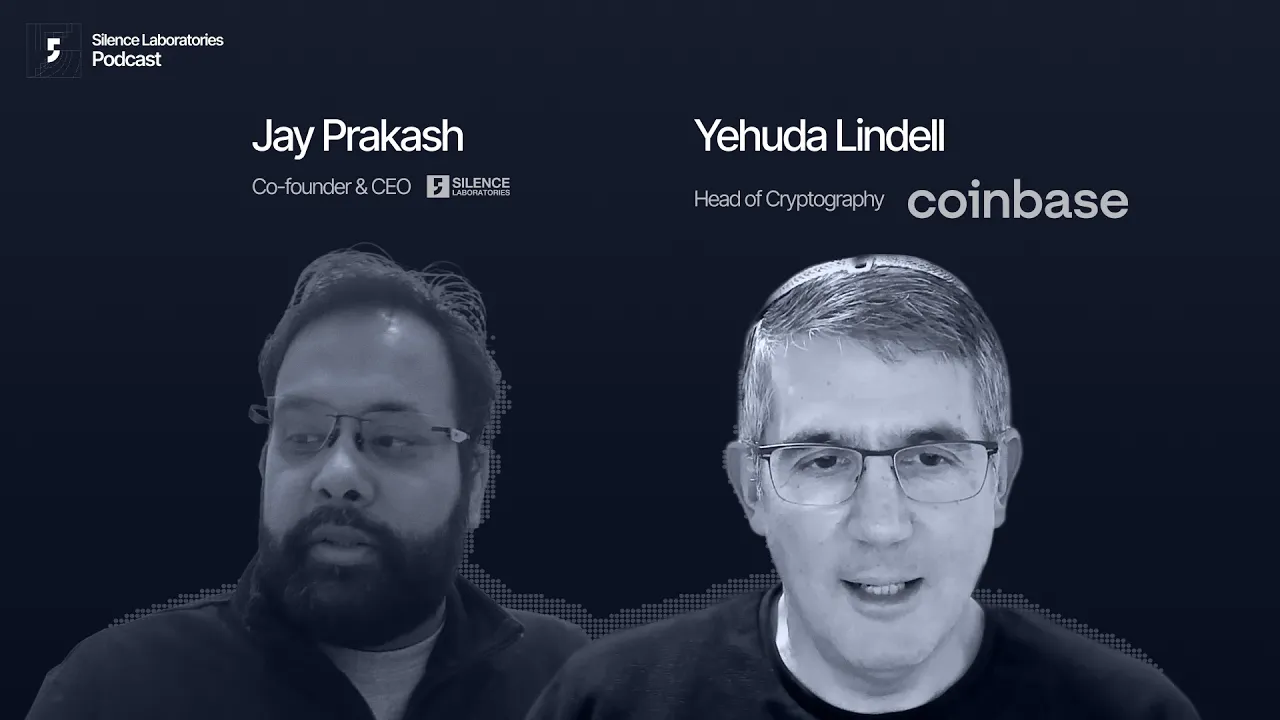
MPC, the Quantum Transition & Putting Cryptography to Work
A cryptographic breakthrough can take years to become a product people use. What gets it there?
In this episode of DeCompute, Jay Prakash speaks with Yehuda Lindell, Head of Cryptography at Coinbase and co-founder of Unbound Security, about the journey from foundational research in multiparty computation to protecting keys in production.
Yehuda recalls the early skepticism around computing on a secret without bringing it together in one place. He shares how Unbound found a clearer path to adoption by addressing the everyday difficulty of managing keys across different systems.
The conversation then turns to post-quantum security: why blockchains are choosing different signature schemes, what makes migration difficult, and how to prepare while the timeline remains uncertain. Jay and Yehuda also discuss cryptography patents, the challenges of standardizing MPC, and where AI is already useful in research and code review.
What you’ll hear in this episode
Yehuda’s path from academic research to Unbound Security and Coinbase.
How MPC protects keys through distribution, and why the surrounding security controls matter.
The customer problem that helped Unbound find product-market fit.
Yehuda’s distinction between defensive patents and patents that discourage adoption.
Why post-quantum signature choices involve trade-offs in size, speed, assumptions, and MPC compatibility.
How cryptographic agility could make future migrations easier.
The opportunities and limits of AI in cryptographic research and implementation.
Why preparation matters even when an earlier quantum threat seems unlikely.
You should listen to this episode if you
Build wallets, custody systems, or infrastructure that manages cryptographic keys.
Lead security or engineering teams planning a post-quantum transition.
Work on MPC, threshold signatures, or applied cryptography.
Are turning technical research into a product for enterprise customers.

